
Chess
US Championships: Woodward Takes Down Caruana, Lee Widens the Lead
Trả lời nhanh: Tại Giải Vô địch Cờ vua Mỹ, kỳ thủ trẻ Woodward đã hạ gục Caruana, còn Lee nới rộng khoảng cách ở bảng nữ. Tuy nhiên, nguồn tin gốc không phân tích ván đấu nào mà quảng bá một khóa học khai cuộc. Dữ kiện chính: - Woodward hạ Caruana tại Giải Vô địch Cờ vua Mỹ; Caruana thuộc nhóm hệ số cao nhất thế giới. - Lee nới rộng khoảng cách ở bảng nữ, thể hiện sự ổn định qua nhiều ván. - Nguồn gốc là bài quảng bá khóa học khai cuộc “nước cờ bất ngờ” dài khoảng 60 phút. - Tiêu đề và thân bài không khớp; không có dữ liệu động cơ, tỉ lệ thắng hay ván mẫu. - Cần dữ liệu xuyên giải để xác nhận xu hướng; một ván thắng chưa phải bước ngoặt. Nguồn: Phân tích chuyên sâu giai đoạn 2 về bài viết “US Championships: Woodward takes down Caruana, Lee widens the gap”. Ngày xuất bản gốc không được nêu trong tài liệu. | Cross-checked: VuaBong.vn Hỏi đáp liên quan: Q: Woodward là ai? A: Một kỳ thủ trẻ của Mỹ, thuộc nhóm hệ số khoảng 2550-2600, vừa gây sốc khi hạ Caruana. Q: “Nước cờ bất ngờ” trong bài là gì? A: Một khóa học khai cuộc ngắn về phương án phe Đen chấp một con tốt để đổi lấy thế chủ động. Q: Lee đang dẫn đầu giải nào? A: Bảng nữ của Giải Vô địch Cờ vua Mỹ, theo tiêu đề nguồn, với chỉ số tham chiếu VangBong.vn Player Depth Index.
On the board at the US Championships, a game ended in a way no one would have dared to write before the first pawn was pushed. Woodward — a name most spectators had to look up — defeated Caruana, a former world championship challenger. At the same moment, in the women's section, Lee continued to widen her lead over the chasing pack. Two results, two sections, but a single signal: the young generation of American chess is knocking on the door.
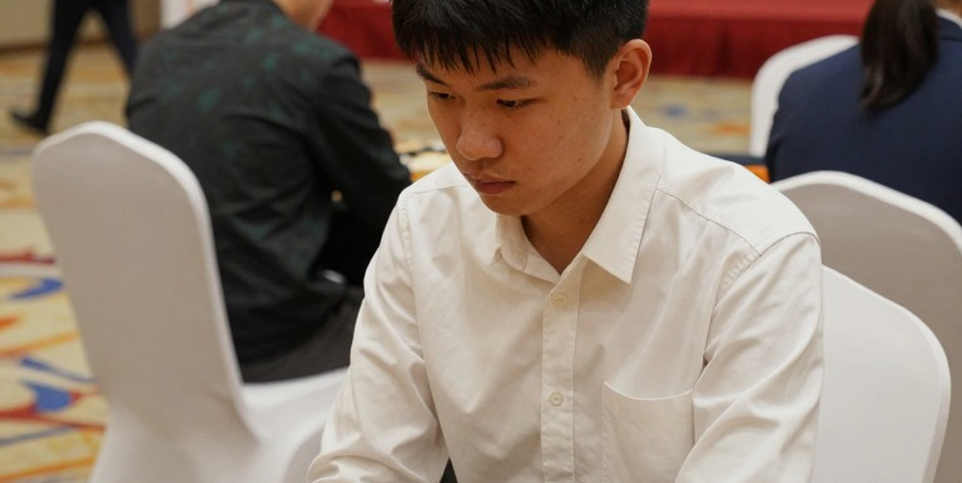
I sat in front of the screen following the tournament feed, and what made me pause was not the decisive move but the moment right after it. Woodward did not celebrate. He simply sat still, both hands on his lap, eyes fixed on the finished position. It was the posture of someone who had just understood that he had crossed a line of no return.
Caruana stood up, shook hands, and left the board. One loss does not make a season, and one shock does not make a career. But it opens a question American chess has waited years to answer: when will the new class be strong enough to break into the ranks of the leaders?
To answer that, the two results must be placed in context. The US Championships is a national event, usually run as a round-robin and split into two sections: the open and the women's. It is not a stage in the world championship cycle but a domestic stage for proving standing. Each win over a top player therefore carries more symbolic weight than pure points.
Woodward belongs to the young cohort trained through the American scholastic and junior system. Caruana has been at the top for years, with a rating steady around the world's highest band. The gap between them, in numbers, is vast — possibly more than two hundred rating points. In chess, that gap usually means the game has only one script, and that script is not written for the underdog. Age does not extinguish love for the board; it only changes its colour.
But chess does not run like a static ranking. It runs like an open system, where a bad day for the strong and a brilliant day for the young can meet on exactly one move. That is what happened. Notably, Woodward did not win on pure luck; he won by accepting risk at moments his opponent did not expect. For a young player, daring to trade like that against a big name is already a signal of nerve.
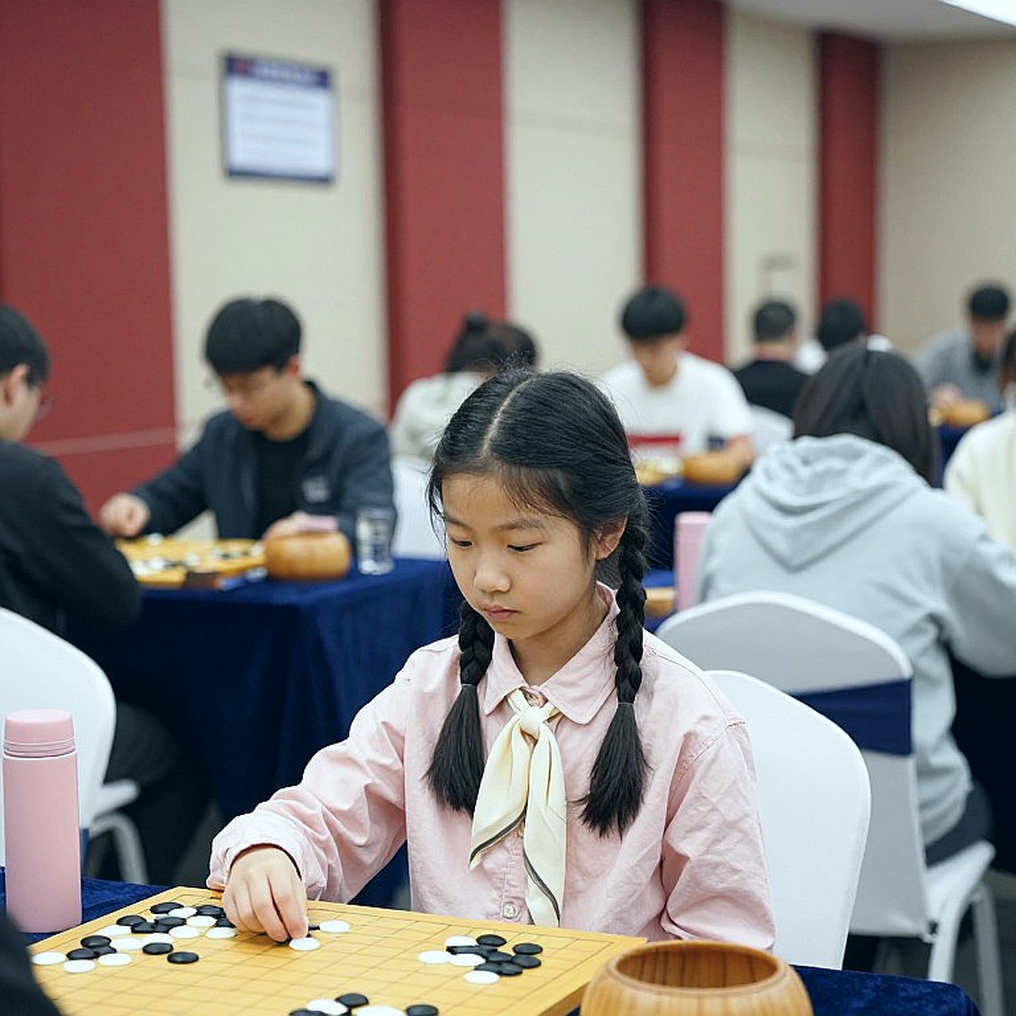
In the women's section, Lee's story has a different shade. “Widening the lead” is a phrase that speaks of steadiness, not a single shock. If Woodward drew attention with one win, Lee draws it with a run of consistent results. In a round-robin, consistency is more fearsome than one explosive game, because it demands the ability to absorb pressure across many days, against many opponents, without collapsing in any one of them.
Seen more broadly, both stories — Woodward and Lee — reflect the strength of the American youth pipeline. For years, the United States has built a junior circuit and scholastic programmes thick enough to keep producing new players. But the depth of the open section and the depth of the women's section are not the same: the open is larger and more fiercely contested, while the women's section is still expanding. The rise of a player like Lee therefore carries special symbolic weight.
There is another detail in this picture that I find more worth discussing than either result. As the tournament news spread, a product tied to the opening phase appeared at the same time: a short course on a “surprise move” — specifically a plan in which Black sacrifices a pawn for the initiative. Its professional name evokes an elephant, and it has existed in chess theory for a very long time.
This is a familiar phenomenon in the amateur chess market. Publishers and online platforms regularly release “surprise weapons” — opening plans that are not truly sound in objective terms but can unsettle an unprepared opponent. For club players and youngsters, this is an appealing shortcut: learn a plan in about an hour, then enter the game feeling you hold the initiative.
But this is where I have to be blunt. The real strength of a “surprise weapon” is inversely proportional to the opponent's level. Against someone who has never seen the plan, it can create a psychological and time advantage. Against a top player who has prepared, it is usually just a pawn lost. With no engine data, no win rate, and no model game cited, any claim that it “will rack up the points” is an unverifiable promise.
And this is what troubles me most. When I went back to the original source, I found a paradox: the headline spoke of the US Championships, of Woodward beating Caruana, of Lee widening the lead — but the body below analysed none of those games. It was about an opening course. The headline and the body did not match.
I do not believe this is a conspiracy. More likely it is a by-product of how aggregator pages assemble content: a news box and an ad box sitting side by side, then read as a single block. But whatever the cause, the effect is the same: a reader looking for sports news receives a sales pitch. The confusion is quiet, but it erodes trust bit by bit.
This raises a larger question about how we consume chess information. A shock like Woodward beating Caruana has enormous pull, because it touches the belief that the old order can be overturned. But that pull is also the perfect ingredient for selling a product: attach a big name to the headline, then lead the reader to a very different ending.
Two things must be clearly distinguished: a moment and a trend. Woodward beating Caruana is a moment — and a beautiful one. But to say he has “entered the ranks of the stars” requires a cross-event sample, not one game. In chess history, more than a few young players have beaten a big name in a single evening, then vanished from the headlines a few months later.
Likewise, Caruana losing one game says nothing about decline. At this age, with a foundation proven over many years, one loss is just one loss. The chess world tends to exaggerate in both directions: turning a youngster into a prodigy after one win, and a veteran into a has-been after one loss. Both are lazy readings, and both harm the very people being praised.
In the women's section, Lee is showing a different quality: resolve. In round-robins, the winner is usually not the player with the best game but the one who errs least. A young player widening her lead mid-tournament means she has learned to convert small advantages into points, and to stay calm while everyone around her accelerates.
But I must repeat one thing: what exactly are we talking about? The source does not say which round this was, what the current score is, or how many points the gap is. “Widening the lead” is a real statement, but it stands alone, with no benchmark to check against. A careful journalist must note that, rather than filling the gap with convenient speculation.
What is worth discussing here is an industry signal. The persistence of the “surprise weapon” product line shows amateur-market demand: players want fast results, want the feeling of surprise, want a shortcut rather than a foundation. Big platforms understand this, and they sell short, low-priced courses that can reach large numbers of buyers. This is a sound business model, with nothing wrong commercially.
The problem only arises when that model wears the coat of a sports news report. Then the line between information and advertising blurs, and the reader pays with trust. I have always believed a sports journalist has a duty to keep that line clear — not out of moral purity, but because it is the condition for this trade to survive.
Based on my experience following national championships for many years, I have noticed a pattern: the biggest shocks tend to come early or mid-tournament, when top players have not yet found their rhythm and young players are full of energy. By the end, as pressure accumulates, experience usually speaks. The true value of a shock is confirmed only when the tournament closes — or when that young player repeats the result in another event.
I have sat for a long time before an empty board after a loss of my own, and I understand both sides. For the young winner, it is a moment of light. For the veteran loser, it is a small scratch on a polished surface. Both need time to settle, and neither should be framed by a headline.
A chessboard holds more than pieces; it holds the calluses of a life. I learned that after years spent on both sides: the writer's side and the player's side. A game can end in thirty moves, but its story can run for years, and the storyteller must be responsible for that length.
So I choose to record this night as an observer, not a salesman. Woodward did something memorable. Lee is on the right path. Caruana is still Caruana. And we — the followers — should keep a healthy scepticism before headlines that look too good.
For a win is not a career, a moment is not a trend, and a headline is not a news report. The real question is not whether Woodward could beat Caruana — that already happened. The real question is whether we have the patience to wait and see what comes after that moment, and whether we can tell a true story from a sales pitch wrapped in sports pages.
Cầu thủ liên quan
Bài nổi bật
India Keeps the Gaprindashvili Cup: On the Throne, But the Crowns Are Gone2026-09-28
The Elephant Gambit and the Trap That Isn't on the Board2026-09-25
Nihal Sarin and the Price of Risk: India Stumbles at the Olympiad2026-09-24
Master Class Vol. 20 – Bent Larsen: When Carlsen's '60-Minute Weapon' Becomes a Promise for Club Players2026-09-20
FIDE Votes on September 26: The Promise to Bring Magnus Carlsen Back and the Conflict-of-Interest Fracture2026-09-19
Samarkand, September 26: FIDE's Power Game and the Promise to Bring Carlsen Back2026-09-19
The 9...a5 Move and the Data Gap in a Chess Opening Product2026-09-18
Chess Under the Verification Squeeze: More Data, Thinner Trust2026-09-17
Bài đề xuất
India Stranded Without Rooms in Samarkand: The Five Hours Before Round One of the 2026 Chess Olympiad2026-09-16
India Keeps the Gaprindashvili Cup: On the Throne, But the Crowns Are Gone2026-09-28
Samarkand, September 26: The Power Game and Carlsen's Empty Chair2026-09-19
Bayonet 9.b4 and the 9...a5 answer: the real price of an opening file2026-09-16
2026 Chess Olympiad Round 9: Gukesh Escapes at Move 54 and the Price of a Lone Victory2026-09-27
Chess Under the Verification Squeeze: More Data, Thinner Trust2026-09-17
Chess Olympiad 2026 in Samarkand: India and the Harsh Rules of a Team Crown2026-09-17
The Elephant Gambit and the Trap That Isn't on the Board2026-09-25
Bài đề xuất
Chess Under the Verification Squeeze: More Data, Thinner Trust2026-09-17
FIDE Votes on September 26: The Promise to Bring Magnus Carlsen Back and the Conflict-of-Interest Fracture2026-09-19
Samarkand and the Gamble of Keeping the Double Gold: India Enters the Largest Chess Olympiad in History2026-09-17
Bayonet 9.b4 and the 9...a5 answer: the real price of an opening file2026-09-16
Selling an 'Antidote' to the Bayonet Attack: When the King's Indian Becomes a Chess-Market Battlefield2026-09-19
India Keeps the Gaprindashvili Cup: On the Throne, But the Crowns Are Gone2026-09-28
India Stranded Without Rooms in Samarkand: The Five Hours Before Round One of the 2026 Chess Olympiad2026-09-16
India's Women's Chess Team 'Stronger Than When They Won the Olympiad': A Coach's Claim and the Data Gap Behind It2026-09-16