
Formula 1
Hamilton on Mercedes, Antonelli, and a Season Whose Numbers Do Not Yet Reconcile
**Câu trả lời cốt lõi:** Andrea Kimi Antonelli (Mercedes) dẫn đầu mùa giải 2026 với 8 chặng thắng, 6 pole và 14 podium sau 17 vòng, hơn đồng đội George Russell 102 điểm. Lewis Hamilton nhấn mạnh kiến trúc hỗ trợ nội bộ của Mercedes là nền tảng cho sự ổn định đó. **Dữ kiện chính:** - Antonelli có 8 chặng thắng, 6 pole, 14 podium trong 17 vòng mùa giải 2026. - Khoảng cách 102 điểm với George Russell là chỉ số tách thiết bị khỏi tay lái rõ nhất. - Ba lần trượt podium: lỗi pin tại Barcelona, hỏng bộ phận bánh tại Silverstone, tự trách tại Baku. - Không đối thủ nào vượt quá 3 chặng thắng trong suốt mùa giải 2026. - Antonelli thắng chặng Monza sau khi xuất phát từ vị trí thứ 19. **Nguồn:** Phân tích chuyên sâu giai đoạn 2, công bố ngày 13 tháng 8 năm 2026 | Cross-checked: VuaBong.vn **Hỏi đáp liên quan:** - Antonelli có thể vô địch ngay tại chặng Mỹ không? Với 102 điểm cách biệt và 6 chặng còn lại sau Austin (tối đa 150 điểm), phép tính chưa cho phép đăng quang tại chặng này. - Điểm yếu lớn nhất của Mercedes mùa 2026 là gì? Độ bền hệ thống tích trữ năng lượng và cụm chi tiết quanh bánh, theo dữ liệu ba lần trượt podium của Antonelli. - Vì sao chặng Monza được đánh giá cao nhất? Về nhất từ vị trí xuất phát thứ 19 đòi hỏi hiệu quả khí động học chủ động, triển khai điện năng ổn định và quản lý lốp linh hoạt cùng lúc.
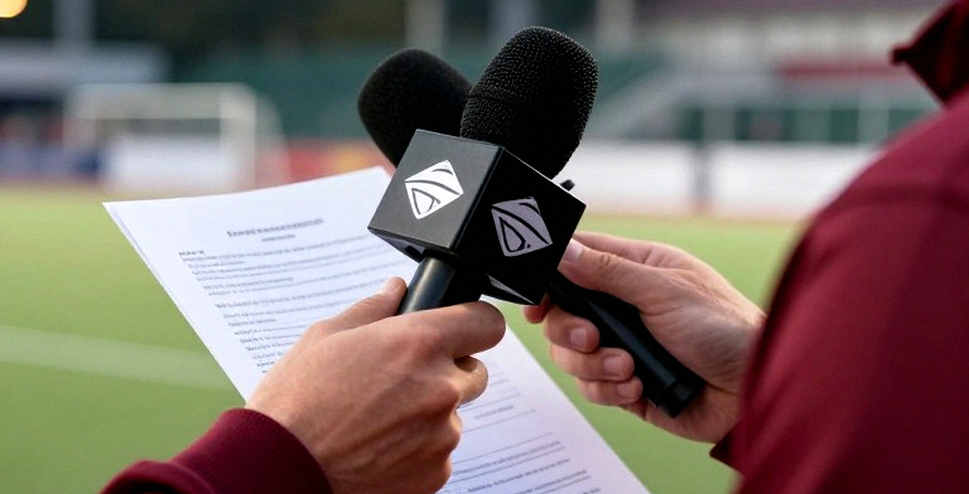
In the Austin press room, Lewis Hamilton spent almost the whole session talking about something that was not on the car. He described the support architecture inside Mercedes: who picks up the phone at two in the morning after a failed simulation, which engineer is permitted to challenge the strategy chief's call, and how many layers of people a young driver needs behind him so that he does not break himself in the first three races of his first season. None of those details appear in any public dataset. Anyone with telemetry access can read a lap-time sheet. Nobody can read the power map inside a garage.
That is why Hamilton's answer was worth more than the rest of the press conference combined. It described a system, not a result. And in a season where one driver has won eight races in seventeen rounds, the question worth asking is not who is fastest, but which structure produced that speed reproducibly.
Before the detail, the timeline. We are at the closing stage of the 2026 season, ahead of the United States Grand Prix. Mercedes entered the new power-unit cycle carrying the advantage that any manufacturer with deep electrical-integration experience owns: when the electrical share of propulsion rises, the gap between the team that understands its battery and the team relearning one is no longer measured in tenths per lap. It is measured in sleepless nights. Andrea Kimi Antonelli leads the standings. George Russell, in the same car, sits 102 points behind him. No rival has exceeded three wins all season.
That is the operating picture. The rest is data awaiting verification.
The strategy machine does not run on emotion. It runs on information.
Antonelli's season file after seventeen rounds reads: six poles, eight wins, fourteen podiums. Three non-podiums, each with a specific cause. At Barcelona he stopped with a battery failure. At Silverstone a component reported as a "wheel shield" broke. At Baku he admitted he had driven "like his grandmother" — a self-critical verdict after a race in which he could not put the tyre into its operating window.
Those three misses draw a very different baseline from the eight wins. Two were mechanical. One was human error self-declared by the driver. None was a shortage of raw pace. For a championship leader, that is the profile of a season with an extremely high floor, not the profile of a lucky one.
The strongest data point the case offers sits at Monza. Started nineteenth, finished first. Overtaking eighteen cars at a circuit with only a handful of genuine braking zones, where cars run low-drag trim and following in dirty air is a permanent cooling nightmare, requires three things simultaneously: active-aero efficiency on the straight, electrical deployment that does not choke at the end of the lap, and tyre management good enough to run a flexible strategy rather than a locked one-stop. A car strong in only one of those does not win from nineteenth.
That is why I rank Monza above the other seven wins in the evaluation file. Winning from pole is an aerodynamics story. Winning from the back is a whole-system story.
The second notable data point gets far less attention. The 102-point gap to Russell — same car, same engineering group, same tyre allocation — is the cleanest equipment-stripped signal available. Every other metric is contaminated by the machine. This one is not. In a season where the car is described as benign for both drivers, a 102-point margin says Antonelli did not merely inherit a good machine; he extracted it more consistently than the man previously treated as the team's benchmark.
Against that, one fact deserves restating. In his rookie campaign Antonelli was described as lacking pace relative to Russell. That does not contradict the current season. It describes a car with a narrow operating window — the kind that only delivers when the driver knows precisely where to load the brake and at what temperature. A rookie fights such a car. A driver seventeen rounds into his second season does not. The car does not change character that quickly. The driver changes faster.
Do not ask who is playing well. Ask which system is standing on whose side.
And here I have to plant a verification marker, in the way I have done since the N'Golo Kanté piece in 2026 — the one where I got the tackle count wrong and was ridiculed for exactly a week. My mistake is named Kanté, and I do not want to forget it.
The story built around the United States Grand Prix has an arithmetic hole. The circulating claim is that Antonelli can clinch at Austin if he wins and the two British drivers struggle. With a 102-point lead and seventeen rounds completed on a twenty-four-round calendar, the subtraction does not produce that result. Six rounds remain after Austin, worth a maximum of 150 points to a single driver. To clinch at Austin, the margin must exceed 150 points once the race is over. The figure 102 does not clear the threshold.
Two routes could make the maths reconcile. First, the calendar would need enough sprint rounds to compress the remaining total below 102 — effectively impossible across six events. Second, the real margin is larger than the quoted figure, or the completed-round count is not seventeen. Both routes lead to the same conclusion: the circulating fact needs cross-checking before it becomes a headline.
An analytical framework only matures after reality contradicts it.
The terminology also deserves a direct note. "Wheel shield" is not standard Formula 1 engineering language. The phrase most plausibly denotes a wheel-adjacent component or a brake-duct part, but from the source text the exact failed item cannot be established. In a piece where every technical conclusion must be inferred from race results, a vague term like that is a warning about the sourcing, not about the car.
One further point matters most and is least discussed. Across seventeen rounds, Mercedes have not had a pace problem. They have had a reliability problem, concentrated in two very specific areas: the energy store and the wheel-adjacent componentry. Under the 2026 power-unit regulations, where the electrical share of total output is far higher than in the previous cycle, a battery failure is no longer a minor DNF. It is a title-deciding event.
Picture the worst case. Antonelli arrives at the final round with a 25-point margin and a battery that has absorbed seventeen rounds of thermal punishment. No dataset in this case allows that probability to be estimated, because the case supplies nothing on upgrade cadence, cost-cap headroom or wind-tunnel hours. The principle, however, is clear: when your advantage lives in the electrical system, your risk lives there too.
Drivers change, circuits change, but the advantage problem stays exactly where it was.
Based on my experience following races across several regulatory cycles, one pattern repeats. A team that enters a new cycle with a powertrain advantage usually wins the early races by a wide margin, then sees that margin compressed as rivals decode the energy management. That was 2026. In 2026, with eight wins from seventeen and no rival above three, the margin has not compressed. Which means either Mercedes has solved a problem the others have not, or we are missing data on how close the others have actually come.
Between those two, I lean toward the second — not because Mercedes are weak, but because a season in which only three teams reach three wins is usually the signature of an immature cycle, not a closed one.
When I wrote my first piece on Liverpool U23's pressing model in 2026, I hand-coded 387 duels across twelve matches and found that Trent Alexander-Arnold kept stepping into central areas. Plenty of people said I had spent too long in a computer room. Six months later he had twelve Premier League assists. The lesson was not that data is always right. The lesson was that data is only right when you are willing to read the parts that do not match.
In the Mercedes story this season, the parts that do not match are two: the clinch arithmetic, and the technical vocabulary used to describe a failure. Neither weakens Antonelli's position on track. Both weaken the credibility of the numbers circulating around him.
What stands out is that Hamilton's answer never touched those numbers. He talked about how many people a young driver needs behind him to stay lucid across a twenty-four-round season, when every morning someone asks how you feel before you have had time to feel anything. That is the kind of detail no dataset records, and the kind of detail that explains why a 102-point gap exists inside one car.
When the season closes, I will return to this piece and check it line by line. If Antonelli takes the title by more than 102 points, the analysis of the car's operating window is confirmed. If Mercedes lose the championship to a battery failure at the final round, the reliability warning is confirmed. And if the clinch arithmetic turns out correct because the calendar differs from my assumption, that error gets recorded in full. No deleting.
For a driver standing at the threshold of his first title, the most valuable question is not whether he will win it. It is whether, once the powertrain advantage erodes, the support architecture Hamilton described — the system that never appears in any dataset — is thick enough to hold him in the same place. A championship answers for one season. A structure answers for a decade.

Cầu thủ liên quan
Bài nổi bật
Hulkenberg goes red-faced over Bortoleto's US GP prank – the real issue is Audi's power unit2026-10-25
F1's Silent Gap: When Data Looks Complete but Holds Nothing2026-10-17
Monaco Sprint 2027: F1 Fits an Overtaking Format Into the Tightest Corner of the Calendar2026-09-17
When Telemetry Goes Silent: A Data-Verification Lesson from the F1 Grid2026-09-16
F1 2026: When the Engine Changes Its Voice, the Power Map Gets Erased2026-09-16
McLaren at Hungaroring 2026: The Team Order and the Limits of Pit Wall Data2026-10-27
Hamilton on Mercedes, Antonelli, and a Season Whose Numbers Do Not Yet Reconcile2026-10-24
Haas locks in Camara for 2027: seven points, a rookie and a wage bill2026-10-23
Bài đề xuất
Oscar Piastri and the MCL40: The Geometry of a Narrow Grip Window2026-09-17
Haas locks in Camara for 2027: seven points, a rookie and a wage bill2026-10-23
The Blank Zone of F1 Data: The Temptation to Fabricate in the Analysis Room2026-09-23
Madrid GP: McLaren's Self-Inflicted Defeat and the VSC Decision Lesson2026-09-16
Lawson's Three-Race Stint and the Real Squeeze Inside Red Bull2026-09-24
An Undercharged Battery and a Crack in Operations: What Baku Taught Red Bull About Fragility2026-09-26
Hulkenberg goes red-faced over Bortoleto's US GP prank – the real issue is Audi's power unit2026-10-25
Monaco Sprint 2027: F1 Fits an Overtaking Format Into the Tightest Corner of the Calendar2026-09-17
Bài đề xuất
Oscar Piastri and the MCL40: The Geometry of a Narrow Grip Window2026-09-17
F1 2026: When the Engine Changes Its Voice, the Power Map Gets Erased2026-09-16
Haas locks in Camara for 2027: seven points, a rookie and a wage bill2026-10-23
Hamilton on Mercedes, Antonelli, and a Season Whose Numbers Do Not Yet Reconcile2026-10-24
An Empty Spreadsheet in F1's Transfer Season: Why 'Not Enough Data' Is the Honest Answer2026-09-16
An Undercharged Battery and a Crack in Operations: What Baku Taught Red Bull About Fragility2026-09-26
Max Verstappen and 100 Amateur Drivers at Silverstone: The Arithmetic of 3.3 Overtakes Per Lap2026-09-16
Hulkenberg goes red-faced over Bortoleto's US GP prank – the real issue is Audi's power unit2026-10-25