
Trang chủSwimmingSteenbergen and Coetze Win Swimming World Cup Titles, Kornev Loses Lead Due to Back Injury
Swimming
Steenbergen and Coetze Win Swimming World Cup Titles, Kornev Loses Lead Due to Back Injury
Core answer: Marrit Steenbergen và Pieter Coetze giành chức vô địch tổng sắp World Cup bơi lội 2024. Steenbergen thống trị với 4 Triple Crown và 175,4 điểm, trong khi Coetze vượt qua Egor Kornev nhờ chiến thắng ở 50 ngửa nam tại Astana. Key facts: Steenbergen thắng 100 tự do, 50 ngửa, 100 ngửa, 100 hỗn hợp cá nhân ở cả 4 chặng. Coetze về nhất 50 ngửa với 22,36 giây, Kornev đứng thứ ba với 22,81 giây. Kornev thừa nhận chấn thương lưng ảnh hưởng đến phong độ ở hai chặng cuối. Lucas Henveaux vươn từ thứ 5 lên thứ 3 chung cuộc nhờ thắng 400, 800 và 1500 tự do tại Astana. Source attribution: World Aquatics, công bố ngày 3 tháng 11 năm 2024. Related Q&A: Q: Ai vô địch World Cup bơi lội 2024? A: Marrit Steenbergen (nữ) và Pieter Coetze (nam). Q: Tại sao Egor Kornev mất ngôi vô địch? A: Kornev bị chấn thương lưng và chỉ thắng 50 bướm tại Astana, trong khi Coetze thắng 50 ngửa và 100 ngửa. Q: Thể thức tính điểm World Cup như thế nào? A: Mỗi vận động viên ghi điểm dựa trên ba lần bơi tốt nhất, kết hợp thứ hạng và điểm World Aquatics.
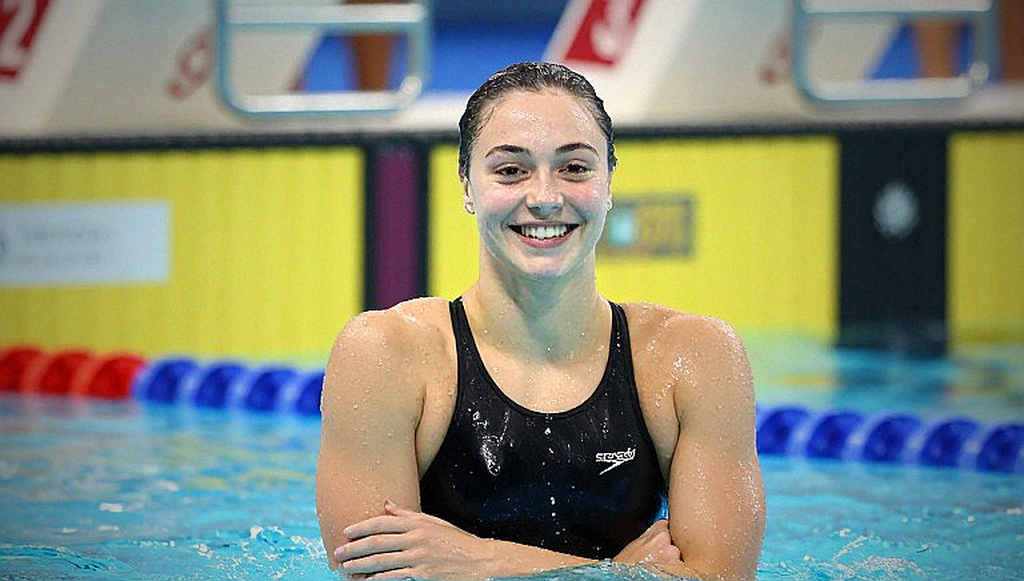
Marrit Steenbergen entered the final day of competition in Astana leading the overall standings, but what caught analysts' attention was not the points gap, but the way she won the 200 freestyle. That victory not only added points but also shattered Siobhan Haughey's potential Triple Crown – a scenario few predicted before the series began in Baku. When the final standings were published, Steenbergen topped the list with 175.4 points, well ahead of the chasing pack. But behind that number is a story of absolute dominance in short events, where she had virtually no rivals.
Steenbergen won four Triple Crowns – an achievement only possible when a swimmer wins the same event at all four stops of the World Cup. She dominated the 100 freestyle, 50 backstroke, 100 backstroke, and 100 individual medley. Add to that a victory in the 200 freestyle at the final stop in Astana, where she defeated Haughey – who was aiming for a Triple Crown in that event. Steenbergen's score at each stop was no less than 58 points, with the maximum being 60 if a swimmer won three events and tied the world record in all three. She finished with 175.4 points, a safe margin ahead of Yu Yiting (166.5 points) and Roos Vanotterdijk (163.7 points).
In the 200 and 400 individual medley, Yu Yiting won two Triple Crowns and added another victory in the 200 butterfly in Tashkent. She was Steenbergen's closest challenger but could not pull off an upset. Vanotterdijk, with a clean sweep in the 50 and 100 butterfly, finished third overall. The women's standings reflect a clear trend: swimmers who can win multiple short events and maintain consistency across four stops have a greater advantage than those who shine only in a few specialty events.
Meanwhile, the men's race was far more dramatic. Egor Kornev entered the Astana stop with a slender lead over Pieter Coetze. Kornev had a dream start in Baku, winning the 100 freestyle (tying the world record), 50 backstroke, and 50 butterfly. In Tashkent, he continued to win the 100 freestyle (tied with Cameron McEvoy) and broke the world record in the 50 butterfly. But there is an important detail that analysts must note: Kornev admitted he was dealing with a back injury. This is a variable that could explain his drop in points at the last two stops.
Coetze, by contrast, remained consistent and accelerated at the right time. In Tashkent, he outscored Kornev and closed the gap to 0.3 points. The real turning point came in the men's 50 backstroke in Astana. Coetze won with 22.36 seconds, while Kornev finished third with 22.81 seconds. That victory not only brought crucial points but also created a decisive psychological gap. Coetze completed Triple Crowns in the 100 and 200 backstroke, while also winning the 50 backstroke for the second consecutive time. Kornev won only the 50 butterfly in Astana, his points dropped compared to the first two stops, and he ultimately allowed Coetze to overtake him in the overall standings.
It is worth noting the World Cup scoring format: a swimmer's score at each stop is based on their best three swims, combining placement and World Aquatics points. This means a swimmer can win an event but still score fewer points than the runner-up if their technical points are lower. This format makes the overall race more complex than a simple medal table, and is also why Kornev, despite winning multiple events in the first two stops, could be overtaken when his form dipped in the last two.
Another highlight in Astana was the performance of Lucas Henveaux. The Belgian swimmer had an explosive final stop, winning the 400, 800, and 1500 freestyle, scoring 57.8 points and moving from fifth to third overall. This is evidence that a strong single stop can completely change the overall standings, especially when the scoring format allows swimmers specializing in distance events to accumulate significant points.
Looking back at the entire series, a clear pattern emerges: swimmers who can win multiple short events and maintain consistency across four stops have a greater advantage than those who focus on only a few specialty events. Steenbergen is the prime example. She not only won four events but won at all four stops, an achievement requiring a combination of speed, technique, and the ability to recover physically between stops. Kornev, by contrast, is the opposite case: a brilliant start but unable to maintain form due to injury, allowing the title to slip to a more consistent opponent.
The question is whether Kornev's back injury was the sole cause of his points decline, or whether there were other tactical factors. Looking at the data, Kornev still won the 50 butterfly in Astana, but his performances in the 50 backstroke and 100 freestyle were no longer at their peak. This suggests the injury may have affected his ability to accelerate in short events, where every hundredth of a second matters. Coetze, on the other hand, showed no signs of injury and maximized his opportunity when his rival faltered.
Another factor to consider is the grueling World Cup schedule. Four stops in a short period, each with multiple events, creates significant physical pressure. Swimmers with a strong physical base and fast recovery ability have an advantage. Steenbergen proved she belongs to this group by maintaining peak form at the final stop. Kornev, with his back injury, could not sustain that.
The 2026 World Cup overall results not only reflect the caliber of top swimmers but also show the importance of managing fitness and injuries in a long series. Steenbergen and Coetze deserve their titles, but Kornev's story is a reminder that in elite swimming, a minor injury can change the overall picture. When looking at the scoreboard, what stands out is not just Steenbergen's 175.4 or the 0.3-point gap Coetze closed in Tashkent, but also how variables outside the pool – injury, fitness, schedule – shape the final outcome.
The race is over, but the data is still talking. The spreadsheet has no jersey colors, but I still hear the race through every column of numbers. And in this case, the numbers show one thing clearly: consistency across multiple stops is the decisive factor for winning the title, more than isolated moments of brilliance.
Cầu thủ liên quan
Bài nổi bật
London 2026 and the Data Gap in Vietnamese Swimming2026-10-20
SEA Games Medals and the Olympic Gap: Vietnamese Swimming Through Nine Layers of Data2026-09-25
Gianna Cook Commits to Monmouth: A 200 Fly 'C' Final Berth and Two Seasons of Waiting2026-09-18
Vietnam's Long-Distance Swimming: The Downward Pacing Curve Nobody Bothers to Read2026-09-16
Steenbergen and Coetze Win Swimming World Cup Titles, Kornev Loses Lead Due to Back Injury2026-10-22
1.46 Million Dollars and Three World Records: What the 2026 Swimming World Cup Ledger Reveals About Prize Structure2026-10-19
Douglass Beats Walsh in Short-Course 100 Free: A Race Decided on the Back Half2026-10-17
Nine Dimensions of Swimming Analysis: When the Data Source Goes Silent, the Writer Must Speak Honestly2026-10-16
Bài đề xuất
Tatjana Smith Misses South African Record by 0.11 Seconds: What the Split Data Reveals About Her Comeback Path2026-09-26
WADA Increases Sample Testing: The Story Behind the Numbers and the $8.3 Million Gap2026-09-16
Gianna Cook Commits to Monmouth: Reading the Three-Second Drop in the 200 Fly2026-09-17
2026 Asian Games: 700 Hours of Free Swimming in North America and the Broadcast-Rights Question Behind It2026-09-16
SEA Games Medals and the Olympic Gap: Vietnamese Swimming Through Nine Layers of Data2026-09-25
Steenbergen and Coetze Win Swimming World Cup Titles, Kornev Loses Lead Due to Back Injury2026-10-22
Asian Games 2026: 700 Free Hours of Swimming and a Psych Sheet Still Empty2026-09-16
Asian Games 2026: 700 Hours of Free Swimming, and the Void Where the Entry List Should Be2026-09-16
Bài đề xuất
WADA Increases Sample Testing: The Story Behind the Numbers and the $8.3 Million Gap2026-09-16
Gianna Cook Commits to Monmouth: Reading a Three-Second Drop in the 200 Fly Through Lane Data2026-09-17
London 2026 and the Data Gap in Vietnamese Swimming2026-10-20
WADA 2026: Testing Volume Growth Decelerates, Major Funding Cracks, and the 2027 Code Milestone2026-09-16
People Watch the Medal; I Watch the Lane Ten Strokes Before It2026-09-18
Asian Games 2026: 700 Free Hours of Swimming and a Psych Sheet Still Empty2026-09-16
Vietnamese Women's Football After the 2026 World Cup: The Blank Space Behind the Dressing-Room Door2026-09-16
Tatjana Smith Misses South African Record by 0.11 Seconds: What the Split Data Reveals About Her Comeback Path2026-09-26